
Electrical testing
We test switchgear, transformers, UPS systems and generators, and check that every breaker and relay trips at its setting before the system carries live IT load.
- Proves
- Equipment carries its load and trips on time
- When
- Before energising, then again under load
- Method
- Your approved test scripts and specification
- You get
- A signed report with a result for every item
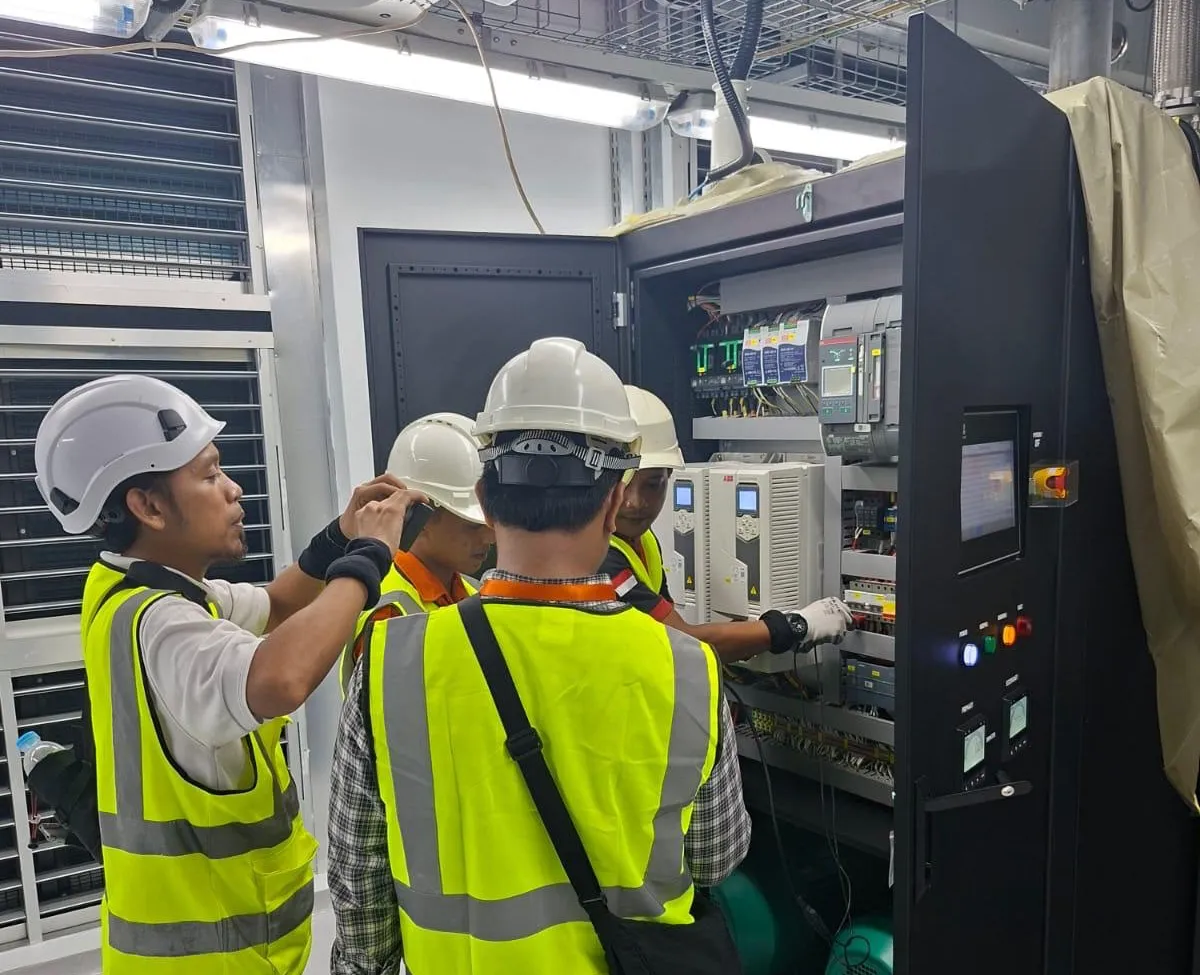
What the tests prove
A power system can look finished on the day it is energised and still hide a damaged cable, a breaker set to the wrong curve or a generator that cannot pick up its load. Each one shows itself during a fault.
We test insulation and earthing while the system is dead, inject current into breakers and relays to time their trips, and run generators and UPS systems on load banks. Every reading is compared with the design and the protection settings.
What we test
Your specification sets the scope. These are the tests most data center projects ask for.
Insulation resistance
Cables, busbars, switchgear and motor windings
Earthing
Earth electrode resistance and earth continuity
Circuit breakers
Trip tests and checks against the approved settings
Protection relays
Secondary injection to time each trip
Transformers
Turns ratio, winding resistance and insulation
Generators and motors
Run tests under load
Power factor
Measured at the main boards under load
Harmonics
Logged with a power quality analyser
Load flow studies
Voltage drop and loading across the network
Short circuit studies
Fault levels checked against breaker ratings
Test before live load goes on
Insulation and protection tests are quick and safe while the system is dead. Once IT load is connected, every test needs a shutdown window.
Installation complete
Switchgear, cables and panels are installed and terminated.
Dead tests
Cables and protection are tested with power off. This is where we come in.
Energisation
The system is powered up in stages.
Load tests
We return to run generators and UPS on load banks.
Integrated testing
The whole facility runs through simulated failures.
Before we arrive
Send this list to your site team. Equipment that is ready on the day is equipment that gets tested on the day.
Installation complete
Equipment is installed, terminated and labelled, ready for inspection.
Isolation and permits
An authorised person to isolate circuits, with permits to work issued.
Drawings and settings
Single-line diagrams, cable schedules and the approved protection settings.
Load banks for load tests
Load banks sized and connected for the generator and UPS tests.
Manufacturers and witnesses
Manufacturer engineers on site, and your commissioning agent invited to watch.
What the report includes
Every test ends with a signed report, ready to attach to the commissioning record. Your commissioning agent gets the same copy you do.
Ask for a sample report
Electrical test report
- 1Equipment tested, with a single-line diagram extract
- 2Insulation and earth resistance readings
- 3Breaker and relay trip times against settings
- 4Generator and UPS load test results
- 5Power quality and harmonic readings
- 6Equipment serial numbers and calibration dates
- 7Signatures of the tester and witnesses
Questions contractors ask
Do you need a shutdown?
Only for equipment that is already live. We plan the windows with your facility team and test as much as we can before energising to keep them short.
Do you run power system studies?
Yes. Load flow and short circuit studies from your single-line diagram, so breaker ratings and protection settings match the real fault levels.
What if a breaker or relay fails?
We record the result, check the setting with your electrical contractor and retest once it is corrected or the device is replaced.
How long does it take?
It depends on how much equipment is in scope and how ready it is. Once we have the single-line diagram, the test plan gives you an estimate.
Other tests we run
- Duct leakage testingPressure tests that show each section of ductwork leaks less than its class allows.
- Room integrity testingDoor-fan tests that show whether a suppression room will hold its agent for the full hold time.
- Testing, adjusting and balancingAirflow and water flow measured and set to the design rates on the approved drawings.
- Mechanical testingLoad tests that show chillers, CRAH units, pumps and fans deliver their design duty.
Book electrical testing
Send the single-line diagram, the specification and your target dates. We reply with a test plan and a quote.